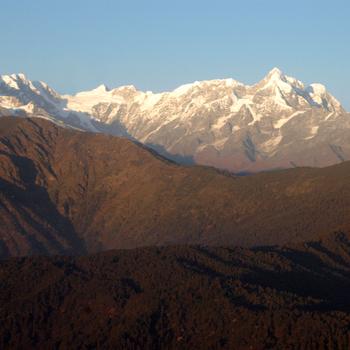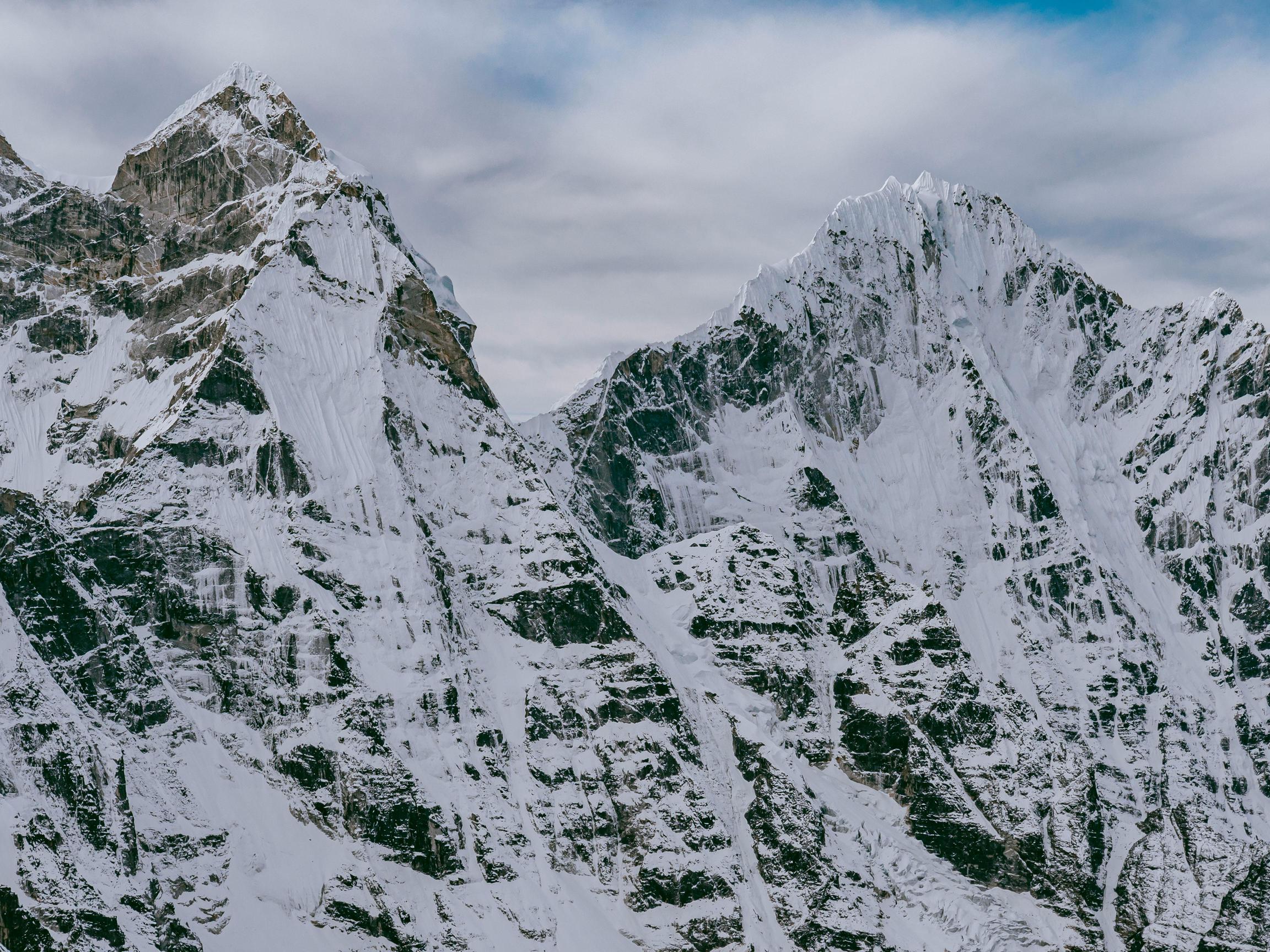
Massive change is sweeping through the Eastern Himalayas.
The region, home to roughly 12 percent of the world’s biodiversity and 1 billion people, is one of the fastest-warming places on Earth due to climate change. As glaciers recede and monsoon seasons shift, some rivers are drying up while others face more frequent and severe floods. Meanwhile, 100,000 hectares (247,000 acres) is lost to deforestation each year. For the people who live here, these changes are devastating — threatening their farms, fisheries and access to clean water, leaving their way of life hanging in the balance.
To protect the nature these communities rely on, Conservation International has teamed up with The Energy and Resources Institute, the Ashoka Trust for Research in Ecology and the Environment, Friendship NGO, Bhutan Ecological Society and Bhutan Trust Fund for Environmental Conservation to launch “Mountains to Mangroves” — an initiative designed to align and accelerate conservation efforts across some of the most rugged and mountainous regions on Earth. Together, the partnership will protect and restore 1 million hectares (2.5 million acres) across Bhutan, India, Bangladesh and Nepal.
While these groups have made progress in reforestation and wildlife protection, the challenges facing the region demand a larger, more unified effort, said Saurav Malhotra, Conservation International’s lead in the region. Mountains to Mangroves brings these efforts together under a shared vision to protect the entire region.
“This is a whole-ecosystem approach,” he said. “Through this partnership, we are aligning global fundraising, scientific research, communications and financial strategies to establish the largest conservation program in South Asia.”
© Conservation International/Abhimanu Chehri
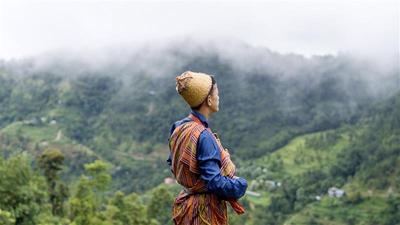
Mist shrouds the mountains of West Bengal, India.
The path of the river
Life in the Eastern Himalayas follows the ebb and flow of rivers.
Atop the world’s highest peaks, fountainheads spring from ice and stone. Glaciers as old as the mountains themselves cling to jagged cliffs, their steady melt feeding streams that carve through steep valleys below. It’s known as the world’s “third pole” — the largest store of freshwater on Earth outside of Greenland and the Antarctic ice caps.
The rivers born here — the mighty Brahmaputra, the Ganges and their lesser-known but equally vital tributaries — are arteries of civilization, sustaining over a billion people across the region.
As rivers rush from the highlands, swollen with glacial melt and monsoon rain, they meet an ancient shroud of forests that ease their currents. At higher elevations, endangered species like red pandas thrive in a bamboo understory of old-growth conifers, while the broadleaf forests of the Himalayan foothills provide habitat for tigers, Asian elephants and the greater one-horned rhino.

© Getty Images
The Eastern Himalayas provide habitat for species like red pandas.
But these forests are fast disappearing. In some places as much as 30 percent of the trees have been cleared for timber, agriculture and infrastructure development. Without trees to anchor the soil and slow surging glacial streams, erosion and flooding are increasing, leading to poor water quality and fueling frequent landslides — events that not only destroy homes but also further degrade the land and water.
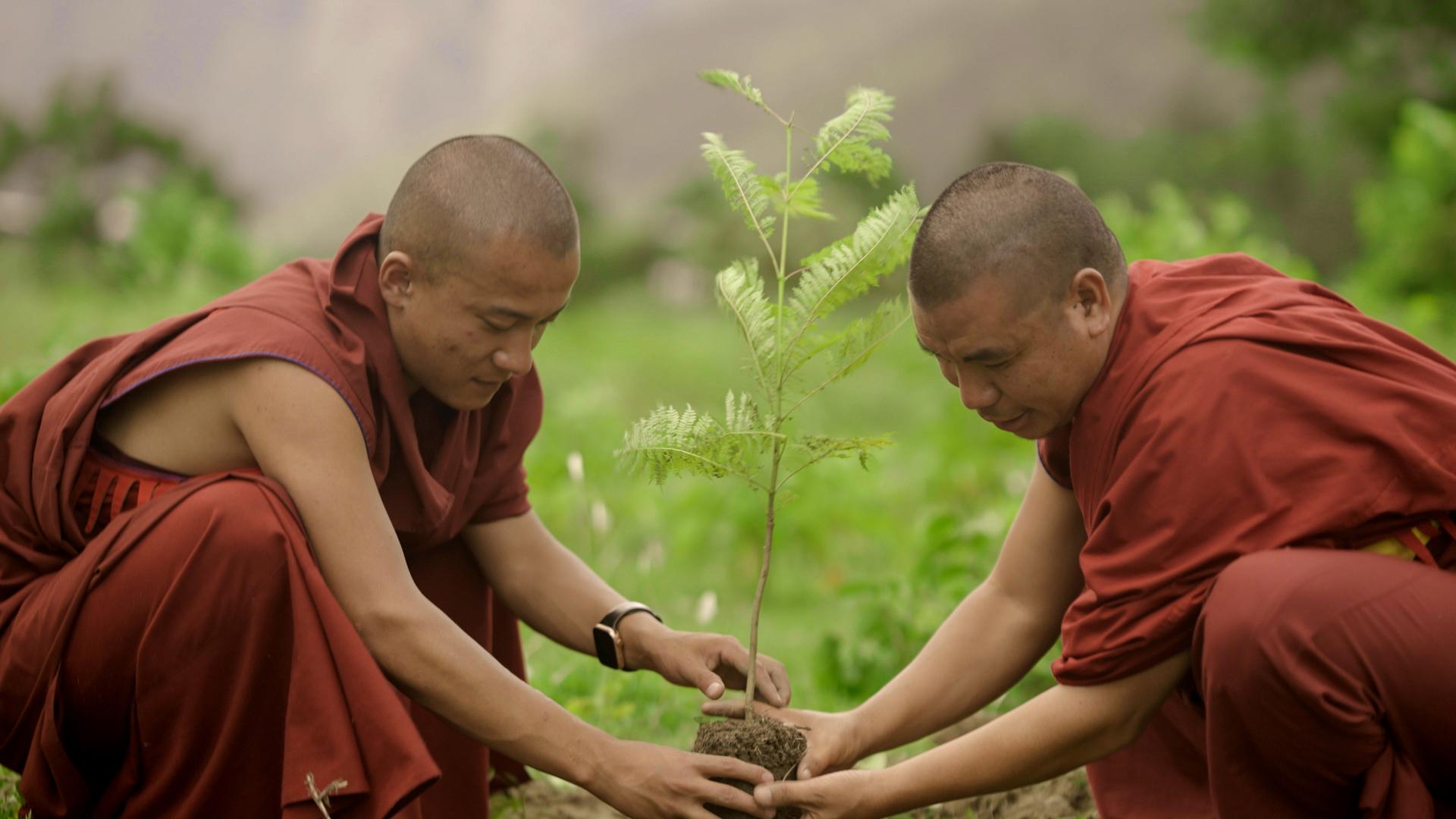
Mountains to Mangroves aims to solve this by planting 1 billion trees across the region — but it’s not as simple as sticking 1 billion saplings in the ground and walking away, Malhotra said.
Planting non-native trees where they don’t belong can actually make ecosystems far less resilient. In some cases, well-intentioned but ultimately harmful projects have planted scores of trees in places where they would not naturally occur — permanently altering the fragile ecosystems on which wildlife and other native species rely.
“Our partners are experts in ensuring that the right trees are planted in the right places by the right people,” Malhotra said. “This stuff really matters, not only for ecosystem connectivity, but for local people who derive value from these trees — harvesting fruit or relying on them to regulate the soil they need to farm.”
As part of this process, Conservation International scientists will closely monitor the conditions of areas chosen for restoration — creating a plan and tools to measure how well these ecosystems and the people living near them can adapt to climate change.
“Despite hosting a significant portion of the world’s biodiversity, this region is one of the least studied areas in the world,” Malhotra said. “Our scientists are now building a very solid evidence base to better understand the nature in this region. The more we know, the better our chances that the trees we plant will survive and thrive.”
© Conservation International/Sonam Adhikari
Community members planting trees in Bhutan.
Into the lowlands
As the Brahmaputra river winds south, forests give way to rolling hills and fertile fields of the Brahmaputra Valley, where hundreds of isolated villages farm rice paddies on land enriched by a steady flow of glacial sediment.
But increasingly, large swaths of land have been scooped up by corporations for tea and rubber plantations. These monoculture crops have not only degraded the soil, stripping it of nutrients and leaving it vulnerable to erosion, they have also fragmented the landscape. Vast tracts of land that once supported diverse wildlife have been transformed into barren fields. Once-connected habitats have been broken up and segmented by fences that create barriers for migrating animals like elephants.
Local organizations such as The Energy and Resources Institute are working in the Indian states of Assam and Nagaland to restore that connection by promoting agroforestry — a sustainable approach that integrates trees and shrubs into agricultural landscapes.
By planting fruit trees, timber species and nitrogen-fixing plants alongside traditional crops, these communities are not only enhancing soil fertility and reducing erosion but also diversifying their sources of income. This blend of agriculture and forestry helps to restore degraded land, support biodiversity and increase peoples’ resilience against climate change.
And with tree roots binding the soil, less sediment is carried downstream, keeping waterways clearer. This is crucial as the rivers converge and make their final journey toward the sea.
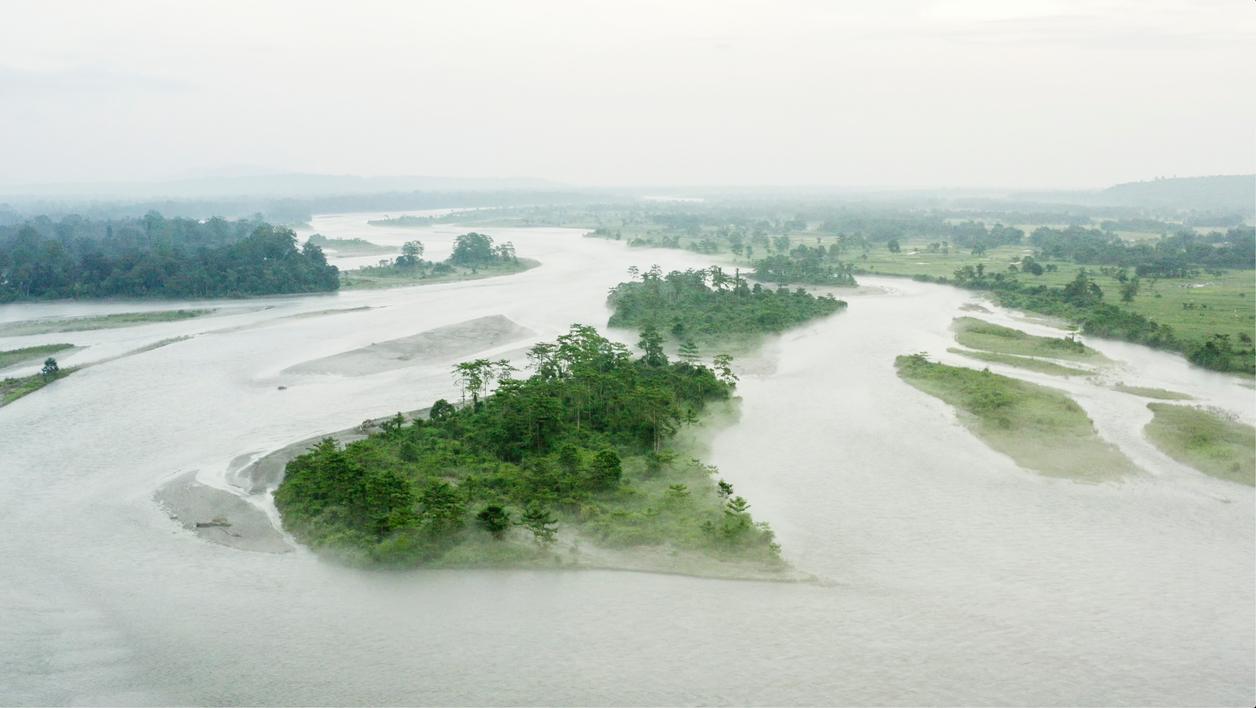
© Conservation International/Ashutosh Kashyap
The Brahmaputra River surges after heavy rainfall.
The shifting delta
Along the coast of India and Bangladesh, fresh water and saltwater mingle in the brackish labyrinth of the largest mangrove forest in the world. This is the Sundarbans — where the delta shifts and reshapes itself with each tide.
Here, excessive sediment can smother mangrove roots and disrupt the breeding grounds of fish and other marine life that thrive in this ecosystem — a problem that upstream reforestation helps to solve.
But the mangroves face other threats, too. Coastal development and unsustainable aquaculture — also known as fish farming — have disrupted water flows and degraded habitats for species like the Bengal tiger and Irrawaddy dolphin. Overharvesting timber has also weakened the mangroves' natural resilience, making them more vulnerable to the storms and cyclones that regularly batter the coast. As the mangrove forests shrink, so does their ability to shield millions of people from rising tides and the ocean's full force.
Despite these challenges, the local organization Friendship has been working in the Sundarbans' mudflats, helping communities plant and care for young mangrove trees. These trees attract shrimp, fish, bees and crabs, and provide locals with food and diverse income sources once the saplings mature.
“The initiative really allows us to zoom out and see the broader landscape,” said Rachel Moriarty, an expert at Conservation International who specializes in understanding how environmental changes affect communities. “In strategizing with Friendship, we realized the potential to expand their effective restoration work into the nearby Chittagong hill tract ecosystem. I don’t think that would have been explored without Mountains to Mangroves guiding us all to think big about ecosystem connectivity.”
Still, the initiative faces enormous challenges ahead. More than 1.5 million people have already been displaced from the region by climate change; scientists predict that glaciers will continue to melt even if the world’s ambitious climate targets are met; and partner organizations remain separated by some of the most rugged terrain on Earth. Yet Malhotra remains optimistic.
“I believe in the power and resilience of the local communities in the Eastern Himalayas,” he said. “By blending modern conservation with time-honored traditions, we can help rebuild a landscape where both nature and communities can flourish once again.”
Will McCarry is the content director at Conservation International. Want to read more stories like this? Sign up for email updates. Also, please consider supporting our critical work.